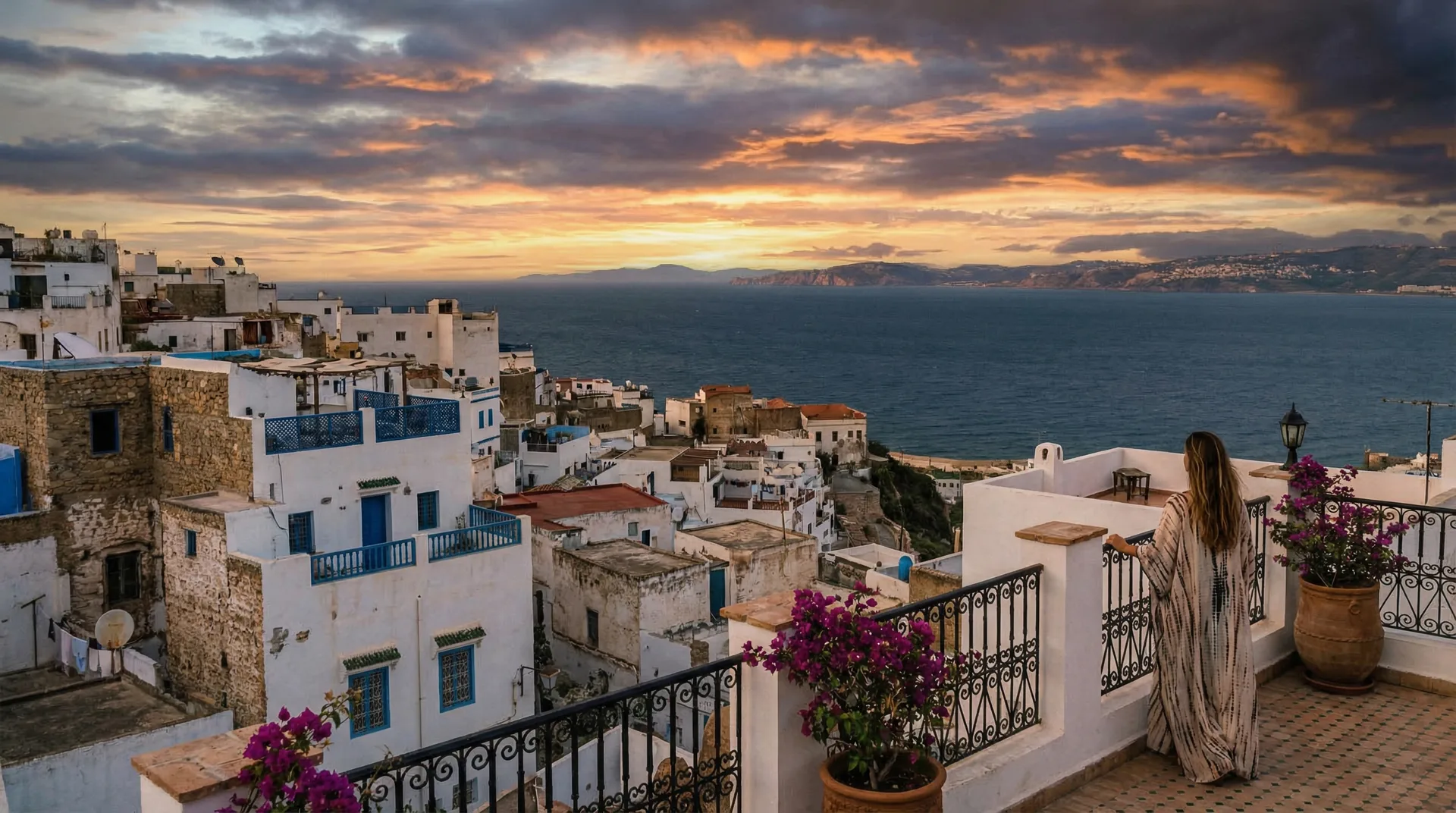
Tangier sits at the breezy meeting point of the Atlantic and the Mediterranean, at the mouth of the Strait of Gibraltar. That position gives it a mild, maritime climate — gentler than Morocco's interior, but wetter and windier. There is no truly bad time to come, only different versions of the city: green and quiet in winter, bright and busy in summer. The short answer is that late spring and early autumn tend to offer the best balance of warm weather, swimmable sea and manageable crowds. Below is the longer answer, season by season and month by month. Treat all temperatures and sea conditions here as typical, approximate norms — Tangier's weather is genuinely changeable, and any given week can run warmer, cooler, wetter or windier than the average.
The short version
- Best overall: late spring (around May–June) and early autumn (around September–October) — warm, drier, swimmable, less crowded.
- Best for the beach: roughly June to October, when the sea has warmed up.
- Best for budget & quiet: winter (December–February), if you don't mind rain and wind.
- Busiest: July and August, peak ferry season and the Moroccan summer holidays.
- Always pack: a windproof layer. The Strait is breezy in every season.
Tangier season by season
Winter (December – February): mild, green and wet
Winter is the mildest-but-wettest season. Daytime temperatures typically sit somewhere around 10–17°C, with rain showers, breezy days and changeable skies — the Atlantic side catches the weather first. In return you get emerald hills, dramatic light between showers, near-empty medina lanes and the lowest prices of the year. The city feels unhurried and lived-in. Bring a proper waterproof and windproof layer, an umbrella that can take a gust, and shoes with grip for the slippery stepped lanes up to the kasbah.
Spring (March – June): the city at its best
Spring is, for many, the loveliest window. Early spring (March–April) is warm by day and cool in the evening, with wildflowers on the hills and the rains tailing off. By late spring (May–June) the days are reliably warm and drier, the sea begins to be swimmable toward June, and the long evening light is beautiful for the seafront and the ramparts. Crowds are still moderate. Pack light layers plus a windproof jacket for the breeze.
Summer (July – August): warm, breezy and busy
Tangier summers are typically warm and dry rather than punishing — often in the low-to-high 20s°C — and constantly tempered by the sea breeze off the Strait, which keeps the city far more comfortable than inland Morocco. This is peak season: the ferries from Spain run full, Moroccan families holiday on the coast, and the beaches, cafés and seafront are at their liveliest. Book accommodation ahead. Pack light, breathable fabrics, strong sunscreen and swimwear — and still a thin windproof layer for breezy evenings.
Autumn (September – November): the calm, warm sweet spot
Early autumn is one of the best times to come. September and into October are typically warm and calmer, the summer crowds have thinned, and the sea — having soaked up the summer heat — is often still very swimmable. The light turns golden and the city exhales after the peak. From late October the first Atlantic systems return and it cools toward winter, so pack a mid-layer for the back end of the season.
Month-by-month at a glance
A quick reference to typical conditions. Temperatures are approximate daytime norms and will vary year to year — always check a forecast close to your dates.
| Month | Typical day temp | Feel | Crowds |
|---|---|---|---|
| January | ~10–16°C | Mild, wet, green, breezy | Very low |
| February | ~11–17°C | Mild, still showery | Very low |
| March | ~13–18°C | Warming, fresh, flowers | Low |
| April | ~15–20°C | Warm days, cool nights | Low–moderate |
| May | ~17–22°C | Warm, drier — lovely | Moderate |
| June | ~19–25°C | Warm, sea warming up | Moderate |
| July | ~21–28°C | Warm, breezy, beach time | High |
| August | ~22–28°C | Warmest, lively, breezy | Highest |
| September | ~20–27°C | Warm, calmer, sea swimmable | Moderate–high |
| October | ~18–24°C | Warm, golden light, still swimmable | Moderate |
| November | ~14–20°C | Cooling, first rains return | Low |
| December | ~11–17°C | Mild, wet, atmospheric | Low |
The wind, and why it matters
No guide to Tangier's seasons is honest without the wind. The Strait of Gibraltar funnels two prevailing winds: the easterly Levante (known locally as the Chergui) and the westerly Poniente. Breezy days are common in every month — which is exactly why summers stay so comfortable here compared with inland Morocco, but also why a warm day can feel fresh on the exposed seafront, at Cap Spartel, or on the open deck of the ferry. A windproof layer earns its place in your bag year-round. On the strongest Levante days, ferry crossings can occasionally be choppy or delayed, so build a little slack into tight connections.
Crowds, ferries and the swimming season
Tangier is a port city, and its rhythm follows the ferries from Spain. The busiest stretch is roughly July and August, peaking around the Moroccan summer holidays, when crossings run full and the seafront is at its liveliest — wonderful energy, but book ahead. Shoulder seasons (May–June and September–October) keep much of the warmth with fewer people. For swimming, the comfortable window is broadly June to October; the Mediterranean-facing beaches just east of the city tend to feel a touch warmer and calmer than the open Atlantic stretches. As ever, the sea changes with the wind from one day to the next.
A note on festivals and Ramadan
Tangier and the wider north host a scattering of cultural festivals through the warmer months — music, film and arts events that move around the calendar from year to year, so we won't pin exact dates here. If you'd like to time a visit around one, check the current year's programme close to booking, or see our northern Morocco festivals calendar for the general shape of the year. One thing worth planning around is Ramadan: during the holy month many cafés and some restaurants change their hours or close in daylight, while evenings come alive after sunset. It remains a rewarding, atmospheric time to visit — just go with the flow. Because Ramadan shifts roughly eleven days earlier each year, always confirm the dates for your travel year before you commit to plans.
What to pack, by season
- Winter: waterproof, windproof outer layer, an umbrella, warm mid-layers and grippy closed shoes for wet, stepped lanes.
- Spring: light layers, a windproof jacket, and a scarf for cool evenings by the sea.
- Summer: light breathable fabrics, swimwear, high-SPF sunscreen, a hat, and still a thin windproof layer for the breeze.
- Autumn: as spring early on; add a warmer mid-layer from late October as the rains return.
For the full kit list, see our seasonal Tangier packing guide.
Frequently asked
What is the best time of year to visit Tangier?
For most travellers, late spring (roughly May to June) and early autumn (roughly September to October) are the sweet spots. The weather tends to be warm and dry, the sea is generally swimmable, the light is lovely, and the crowds are usually thinner than the July–August peak. These are typical patterns rather than guarantees — Tangier's Atlantic edge can always surprise you.
Is Tangier hot in summer?
Tangier summers (around July and August) are typically warm and dry rather than scorching — often somewhere in the low-to-high 20s°C — and the constant sea breeze off the Strait keeps it noticeably cooler than inland cities like Marrakech or Fes. The trade-off is that this is the busiest season, with ferry traffic and Moroccan holidaymakers at their peak. Figures are approximate norms and any given day can run warmer or cooler.
What is the weather like in Tangier in winter?
Winter (roughly December to February) is the mild but wettest season. Daytime temperatures often sit somewhere around 10–17°C, and you can expect rain showers and breezy, changeable days — the Atlantic side catches the weather first. The upside is green hills, low prices, very few tourists and an atmospheric, lived-in city. Pack a proper waterproof and windproof layer.
When can you swim in Tangier?
The comfortable swimming season is broadly June to October, when the sea has warmed up and the air is reliably warm. Some hardy swimmers go in earlier and later, and the Mediterranean-facing beaches east of the city tend to feel a touch warmer and calmer than the open Atlantic side. Sea conditions vary day to day with the wind, so treat this as a general window.
Is it windy in Tangier?
Yes — wind is Tangier's defining feature. The Strait of Gibraltar funnels two prevailing winds: the easterly Levante (Chergui) and the westerly Poniente. Breezy days are common in every season, which is part of why summers stay comfortable. It's worth packing a windproof layer year-round, especially for the seafront, Cap Spartel and any ferry crossing.
Does Ramadan affect visiting Tangier?
It can. During Ramadan many cafés and some restaurants adjust their hours or close during daylight, and the rhythm of the city shifts — quieter days, lively evenings after sunset. It's still a rewarding time to visit if you go with the flow. Ramadan moves roughly eleven days earlier each year on the Gregorian calendar, so check the dates for your travel year before booking.
Time it right
Tell us your dates and we'll tell you what to expect.
We work in Tangier year-round and know how each season really feels on the ground. Share your travel window and we'll build an itinerary that makes the most of it — weather, sea and all.
Request an itinerary