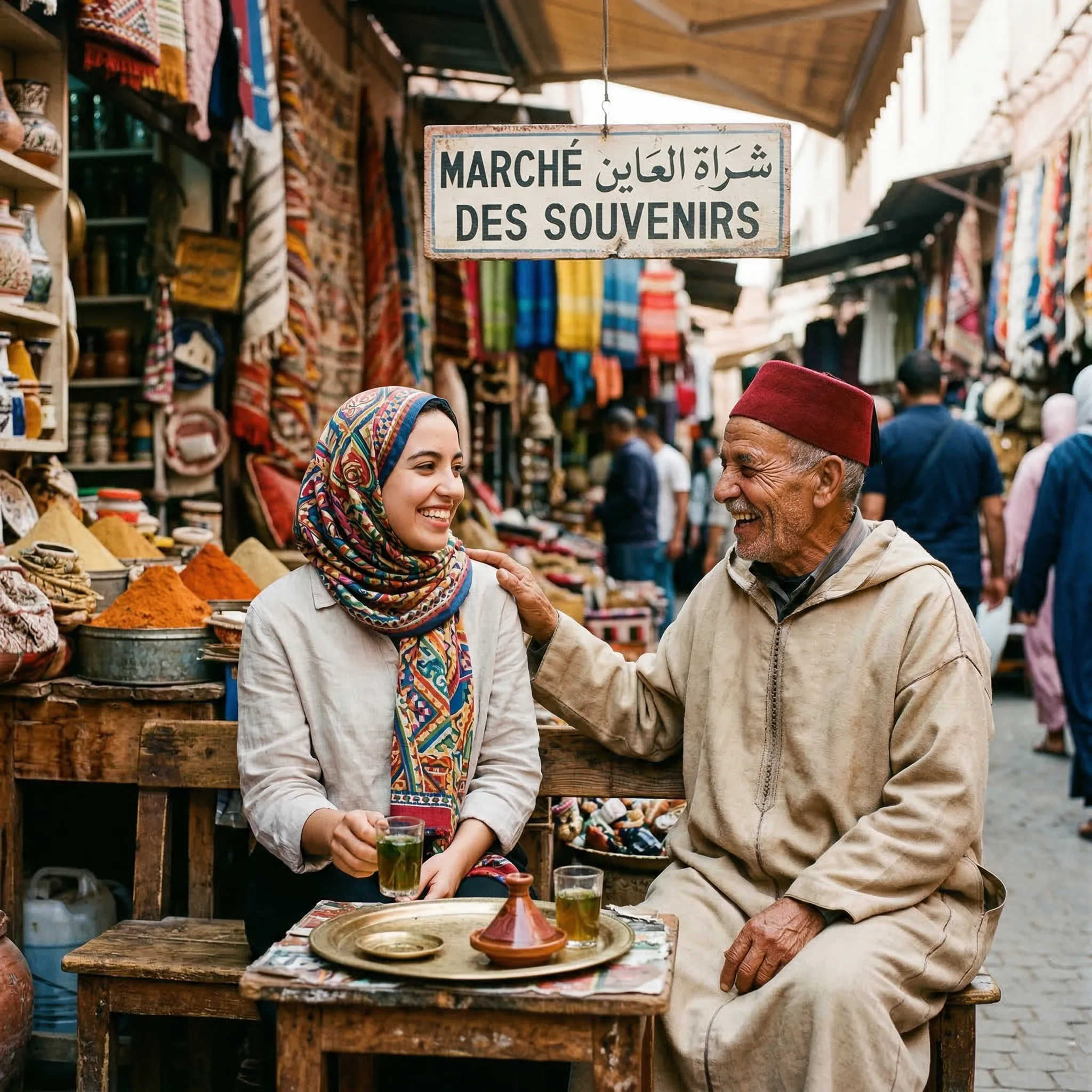
Tangier runs on tea. Atay in Darija, the Moroccan dialect: green gunpowder tea, fresh spearmint, a quantity of sugar that surprises most visitors, poured from a height into a small glass and handed to you with both hands. In few places is it as woven into daily life as here, where the café terrace — watching the ferries cross the Strait — is practically a civic institution. It is not just a drink. It is an act of welcome and a way of passing the day.
Where did the ritual come from?
Chinese gunpowder green tea reached Morocco via British merchants in the mid-18th century, when Britain was courting North African trade — and Tangier, guarding the Strait, was a natural point of entry. The Sultan took to it more than coffee and adopted it enthusiastically. Within a generation it had replaced older infusions across the country. The mint — spearmint, nana — was a Moroccan addition. The combination of bitter gunpowder tea with cooling mint and sweetening sugar became definitive within decades and has barely changed since.
How is Moroccan mint tea actually brewed?
The process is meticulous and unhurried — deliberately so. A little boiling water is first poured over the loose gunpowder leaves in the berrad (the steel teapot), swirled, and discarded — this rinse removes bitterness and wakes the leaves. Fresh boiling water goes in, followed by a generous fistful of fresh spearmint packed tight. Sugar — the traditional amount is startling, perhaps four or five teaspoons per pot — is added and the pot returned to the flame for a brief simmer. The host then pours a glass, tastes, adjusts, and pours again from 30–40 centimetres up: the fall aerates the tea and creates the prized foam at the rim. The first three glasses come from one pot, the flavour shifting subtly with each.
What does 'Berber whisky' mean?
The nickname is affectionate and self-aware. In a country where traditional households do not serve alcohol, mint tea carries the social weight that a generous dram might carry elsewhere: it is offered to guests, it lubricates conversation, it signals respect. Call it 'Berber whisky' to a Moroccan host and you will almost always get a smile of recognition. It is not a slur or a joke at anyone's expense — it is a point of pride, an acknowledgement that this ritual is Morocco's own distinct cultural currency.
What is the etiquette for guests?
A few points matter. Accept the first glass with both hands or your right hand — never the left alone. Do not rush: the tea is hot and the conversation is the point. Three glasses is traditional; refusing the first is impolite, but a warm 'baraka' after the third signals graceful satiation. In a shop or souk, accepting tea does not obligate you to buy anything, whatever the sales pressure implies — it is a genuine gesture of welcome, and you can leave gracefully after the glass. In a home, stay for all three rounds.
Café Hafa and the cafés of Tangier
Nowhere is the ritual more atmospheric than in Tangier's cafés. Café Hafa, open since 1921 on terraces cut into the cliff in the Marshan district, has served tea to Paul Bowles, the Beat writers, the Rolling Stones and generations of locals; its tiered terraces look straight across the Strait to Spain, and the tea at dusk here is the quintessential Tangier experience. The old cafés around the Petit Socco are the other classic — the throbbing heart of the International Zone, where the smugglers, spies and writers traded gossip over glass after glass.
Out in the Rif near Chefchaouen, wormwood (chiba) is sometimes added to the mint for a bitter, herbal warmth. Along the coast, some households add orange blossom water. In Tangier itself you will find both the formal ceremony in a guesthouse and excellent tea poured for a few dirhams at a port-side stall — and it will be just as good.
Can you recreate it at home?
With a little attention, yes. Chinese gunpowder green tea (from any good tea shop) and fresh spearmint are the two non-negotiables. The pour from height is technique, not performance: practise over a sink first. The sugar is a matter of taste, but too little and you miss the way sweetness balances the bitterness of the gunpowder leaf. A traditional narrow-spouted steel teapot is the ideal vessel. Many of our guests bring one home from the Tangier medina as the most useful souvenir they could have chosen.
Frequently asked
Why is Moroccan mint tea called 'Berber whisky'?
The nickname is a wry local joke: Morocco is a predominantly Muslim country where alcohol is uncommon in traditional households, yet mint tea is poured with the same ceremony, hospitality and quantity that whisky might be offered elsewhere. The phrase dates to at least the mid-20th century and is used affectionately by Moroccans themselves.
What type of mint is used in Moroccan tea?
Spearmint — nana in Darija — is the classic variety: bright, cool and slightly sweet. In summer some families add a handful of wormwood (chiba) for a bitter, herbal note, common in the Rif near Chefchaouen. What you will never find is peppermint, which Moroccans consider too sharp.
How many glasses of tea is it polite to accept?
Three is the traditional number — one for life, one for love, one for death, in the well-known saying. Refusing the first glass is considered rude; accepting all three is warm and respectful. After three, a polite 'baraka' (thank you, I'm satisfied) is perfectly understood.
Where is the best place to drink mint tea in Tangier?
Café Hafa, on terraces cut into the cliff above the sea, has poured tea since 1921 and is the iconic spot — a haunt of writers and musicians, with the Strait of Gibraltar laid out below. The old cafés around the Petit Socco are the other classic choice, where the International Zone crowd once gathered.
Is there a specific time of day for the tea ritual?
No fixed time — tea is appropriate at any hour. In Tangier's café culture it punctuates the whole day: morning over a newspaper, afternoon watching the ferries cross, dusk at Café Hafa. The ritual is about hospitality and pause, not clock-watching.
Experience it properly
Tea at Café Hafa as the sun sets over the Strait.
Every Tangier Tours itinerary opens with a welcome tea on a kasbah terrace. We can also build in a dusk visit to Café Hafa and the café crawl through the Petit Socco, with the history behind the ritual.