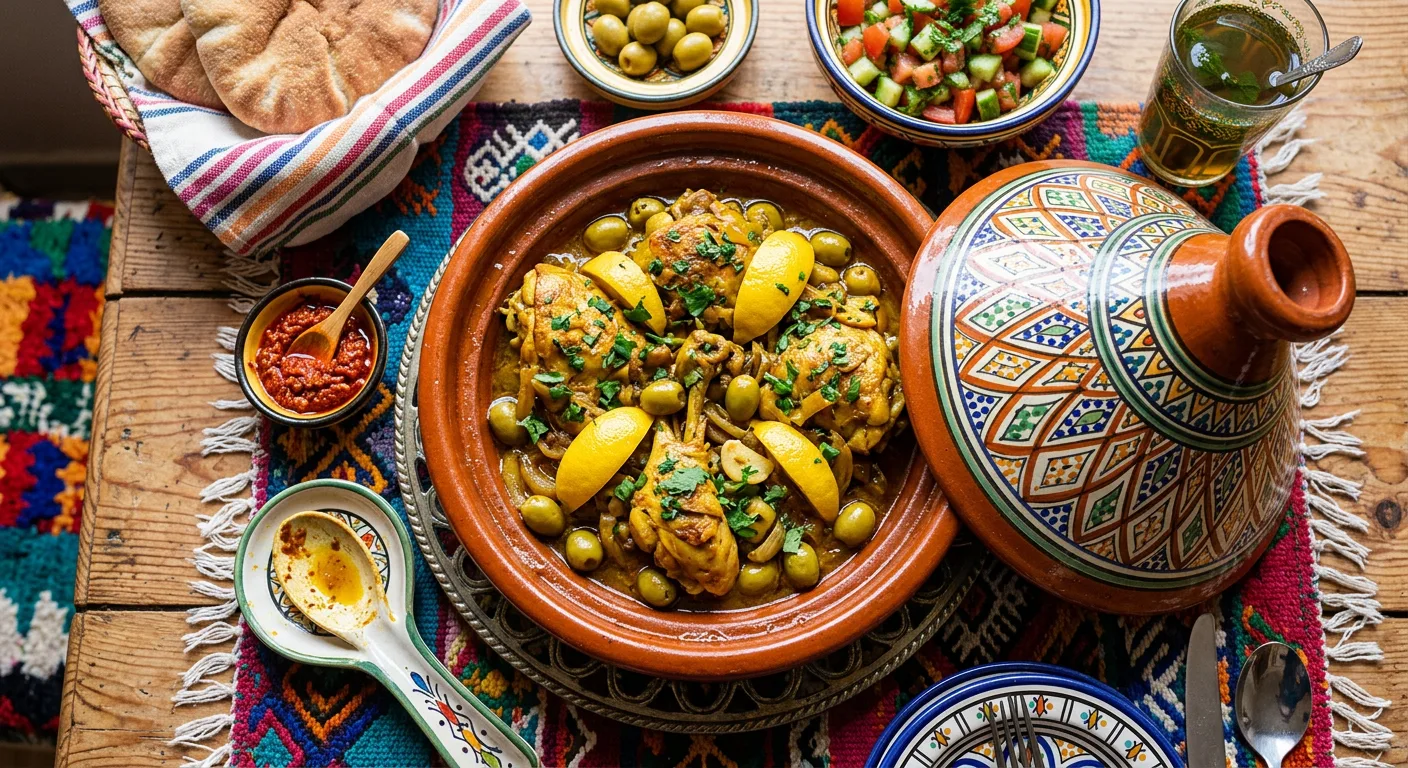
Tangier eats differently from the rest of Morocco. It is a port at the meeting of the Atlantic and the Mediterranean, a few miles from Spain, and its food carries all of that: grilled fish that arrived that morning, Spanish-style bocadillos and tapas habits, the full Moroccan repertoire of tagine and couscous, and a café culture imported by the writers who made the city their home. Here is what to seek out.
The fish, first of all
Tangier's defining meal is grilled fish. The boats land sardines, sea bass, sole, calamari and prawns; the small restaurants behind the port grill them over charcoal with little more than salt, lemon and a brush of chermoula (a coriander, cumin and garlic marinade). The classic order is a mixed platter — a friture — shared across the table. Ask your guide for a neighbourhood spot near the port and arrange through us a food experience that includes the market.
The Tangier fish tagine
Inland Morocco braises lamb and chicken; coastal Tangier turns the conical clay pot to the sea. A tagine of white fish layered over potatoes, peppers and tomatoes, bound with chermoula and slow-cooked until the fish flakes, is the city's signature home dish. It is rarely the most photographed thing on a menu, but it is the one to order if you want to taste what Tangier cooks for itself.
The Spanish thread
Decades of Spanish presence left their mark on the table. You'll find bocadillos (filled bread rolls) at lunch counters, fried-fish stands that owe as much to Cádiz as to Casablanca, churros and Spanish coffee in the ville nouvelle, and tapas-style small plates in the old International Zone cafés. It is a genuinely distinct food culture, and one you will not find in Marrakech or Fès.
Street food worth stopping for
Around the Grand Socco and the medina lanes, the standards are msemen (flaky griddle bread, eaten with honey or cheese), freshly fried fish in paper, and in winter a cup of babbouche — cumin-spiked snail broth from which you pick the snails with a pin. Fresh orange juice and mint tea are everywhere. The fish market by the port, and the grills tucked behind it, are where locals eat the catch cheaply and very well.
Vegetarian and vegan eating in Tangier
Moroccan cuisine is generous to non-meat eaters, though veganism is not widely understood and will need explaining. The salad starters — zaalouk (smoked aubergine and tomato), taktouka (roasted pepper and tomato), carrot with cumin, beetroot with chermoula — are all plant-based and arrive automatically at a traditional restaurant. A plain vegetable tagine with olives and preserved lemon is available everywhere. Vegans should ask specifically about smen (aged butter), used in couscous and some breads, and note that starters sometimes contain egg.
Cooking classes and private kitchens
A half-day cooking class is one of the best single experiences Tangier offers. The format we prefer begins with a market or port walk to source the fish and produce, then a session in a private kitchen learning two or three dishes — typically a Tangier fish tagine and a salad or two. You eat what you make, with mint tea and the warm pride of having actually done it. We include this in our cultural tours and can arrange it as a standalone for guests staying independently.
What to drink, and Café Hafa
Morocco is a Muslim country; alcohol is available in licensed restaurants and hotels but not universally. The default drink is atay — mint tea poured from a height to create froth. The place to drink it is Café Hafa, open since 1921 on terraces cut into the cliff above the sea, a haunt of Bowles, Burroughs and the Rolling Stones, and still the best seat in Tangier to watch the Strait at dusk. Fresh juices and coffee are everywhere; tap water is treated but variable, so use bottled.
Frequently asked
Is Tangier food spicy?
Tangier cooking is aromatic rather than hot. Cumin, saffron, preserved lemon, coriander and the local chermoula marinade dominate. Harissa appears as a side condiment in some places but is rarely built into a dish. With the city's Spanish and Mediterranean influences, much of the seafood is simply grilled and seasoned. Guests with low spice tolerance rarely have any issue.
What seafood should you order in Tangier?
Tangier sits where the Atlantic meets the Mediterranean, so the catch is exceptional. Grilled sardines, sea bass, sole, calamari, prawns and the famous local fish soup are all worth ordering. A mixed grilled-fish platter (often called a 'friture') from a port restaurant is the classic Tangier meal. Ask what came in that morning.
What should vegetarians and vegans order in Tangier?
Moroccan food is generous to vegetarians. Zaalouk (smoky aubergine and tomato), taktouka (roasted pepper salad), bissara (dried fava bean soup with cumin and olive oil) and a plain vegetable tagine are all excellent and widely available. Vegans should note that smen (aged butter) is sometimes used in cooking; it is worth asking specifically.
Where do you find the best street food in Tangier?
Around the Grand Socco and the medina lanes you'll find msemen (flaky griddle bread), bocadillos in the Spanish style, freshly fried fish, snail broth in winter, and fresh juice stalls. The fish market by the port and the small grills behind it are where locals eat the catch cheaply and well.
Can you do a cooking class in Tangier?
Yes, and we recommend it. A good class takes you to the market or the port in the morning to choose fish and produce, then into a private kitchen to cook two or three dishes — often a Tangier-style fish tagine. You eat what you make. We can arrange this as part of a cultural itinerary or as a standalone.
Is tap water safe to drink in Tangier?
Tap water is treated but quality varies by neighbourhood. We advise guests to use bottled water for drinking and to clean teeth. Restaurants use tap water for cooking without issue. Avoid ice at informal street stalls; ice in established restaurants is fine.
Eat well in Tangier
We'll build a culinary thread through your itinerary.
From a port fish market walk to a private Tangier cookery class and tea at Café Hafa, Tangier Tours weaves the best of the city's food into every programme — including dietary accommodations arranged in advance.
Enquire about a culinary itinerary