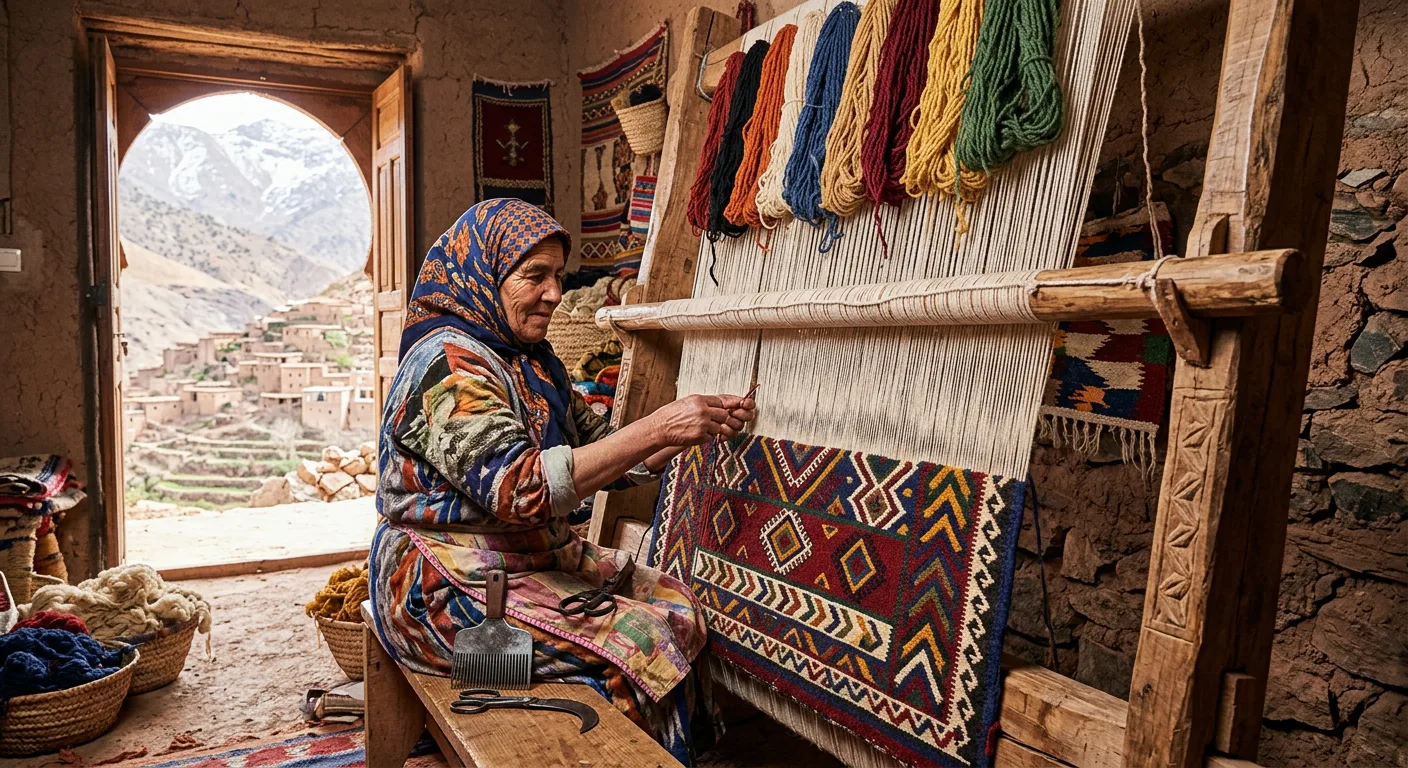
The Tangier medina is not a market in the conventional sense. It is a living quarter that climbs from the port up to the kasbah, with shops and workshops threaded between houses, the Grand and Petit Socco at its hinges. Wandering in without a plan is half the joy. Wandering in without any knowledge is how you end up with a "camel-leather" bag that starts peeling by the time your ferry docks.
What are the best things to buy in the medina?
The quality purchases are those tied to genuine craft. Babouche slippers in natural goatskin are a sensible start — comfortable, light, made nearby. Rif wool blankets and rugs, brought down from the mountains around Chefchaouen, are warm and characterful. Brass and copperware, hammered by hand, make beautiful pieces. Ceramics and tilework and embroidered textiles round out the list. Tangier's cosmopolitan past also leaves it rich in antiques and brocante — old prints, lamps and furniture from the International Zone years, found in the ville nouvelle and the upper medina.
Items to approach with caution: mass-produced ceramics painted to look Moroccan, synthetic "leather" with a chemical smell, and "antique" Berber silver that is actually factory white metal. The surest way to avoid these is to watch something being made, or to buy from a dealer your guide trusts.
Where should you go for each craft?
The medina is small and walkable. The lanes around the Petit Socco and climbing toward the kasbah are where leather, textiles and brassware concentrate. The Grand Socco and the streets off it hold the food and spice market and everyday goods. Antique and brocante shops cluster in the upper medina and the ville nouvelle, reflecting the layered history. The further you walk up from the port, away from the day-trip crowds, the better the quality and the gentler the prices.
How does bargaining actually work?
The medina runs on a dual-price system: an opening price for tourists and a closing price set by negotiation. This is not deception — it is a centuries-old social ritual, and participating respectfully is expected. A few principles we tell every guest:
- Start at 40–50% of the first quoted price and work up slowly.
- Never reveal how much you want to spend; let the seller make all the moves first.
- Smile. Bargaining is social, not adversarial. If the atmosphere turns sour, walk away.
- Walking away genuinely — heading for the door — is the most effective tactic and almost always produces a better offer.
- Once a price is agreed, honour it. Changing your mind after acceptance is considered rude.
- Fixed-price cooperatives exist in the medina and are marked as such. They are useful reference points for fair value.
How do you ship large purchases home?
Reputable rug and antique dealers have longstanding relationships with international freight agents. A rolled rug shipped to London or New York typically costs US$120–250 and arrives within two to four weeks. Flat-packed brass and ceramics ship for US$80–150 a box. With Spain a short ferry away, some buyers simply carry purchases back across the Strait. Always ask for a detailed receipt listing the item, dimensions, material and agreed price, and photograph it. Antique items over 100 years old require an export declaration; reputable dealers know the process.
For smaller items, DHL and FedEx offices operate in the ville nouvelle and will accept packages at the counter. Postal shipping via La Poste Maroc is inexpensive but slow and best for non-fragile textiles.
What about the leather and the port touts?
Tangier leather is good — simple is best: natural tan, burgundy or navy babouches; undyed goatskin purses; classic satchels without excessive stitching. Avoid anything sold as "camel leather," which is a marketing term; the hide is almost always goat or sheep. The other thing to know is the faux-guide who attaches himself near the port and steers you to a particular shop for commission — politely decline, and shop where you choose.
How do you navigate the medina with a guide?
A knowledgeable local guide changes the experience entirely. We take our guests off the main lanes into the working corners — where a craftsman is setting tiles by hand, or a weaver is threading a loom — places that sell direct, at fair prices, where you understand what you are buying. Our private medina guides are licensed and independent — they receive no commission from any shop, so they take you where the quality is, not where the margin is. See our Tangier destination guide for the broader picture, or browse our private tours that include a curated medina morning.
Frequently asked
What are the best things to buy in the Tangier medina?
Leather goods (babouche slippers, bags, belts), Rif wool blankets and rugs, brass and copperware, ceramics, and embroidered textiles are the standout purchases. Tangier's Spanish and Andalusian heritage also brings distinctive antiques and brocante into the mix. All are made or sourced in Morocco and carry genuine craft value.
Is bargaining expected in the Tangier medina?
Yes — in the medina and around the Soccos, the first price quoted is rarely the final one, and opening prices near the port can be high because of the ferry day-trippers. A calm, good-humoured counter of 40–60% of the opening price is normal. Agree only if you are genuinely happy; walking away is acceptable and often produces a better offer.
How do I avoid buying low-quality goods?
Buy from workshops or cooperatives where you can watch the craft being made. For rugs, ask to see the knot count and feel the weight. For leather, genuine goatskin has a faint animal smell; synthetics do not. Walk a little way up from the Petit Socco, away from the port, for better quality and lower pressure.
Can I ship large purchases from Tangier back home?
Yes. Reputable carpet and antique dealers have shipping arrangements with international freight agents, and DHL/FedEx have offices in the ville nouvelle. A rolled rug to Europe typically costs US$120–250 with delivery in two to four weeks. With Spain so close, some buyers even carry purchases back on the ferry. Always get an itemised receipt.
Which parts of the medina are best for which products?
The lanes around the Petit Socco and up toward the kasbah hold leather, textiles and brassware. The Grand Socco area and the streets off it have the food market, spices and everyday goods. Antique and brocante shops cluster in the ville nouvelle and the upper medina, reflecting the city's cosmopolitan past.
Do Tangier medina shops accept credit cards?
Most small stalls are cash-only. Larger shops and cooperatives increasingly take Visa and Mastercard, sometimes with a 2–3% surcharge. Carry dirhams (MAD) for the medina; euros are also widely accepted given the ferry traffic, though you'll get better value in dirhams. ATMs are around the Grand Socco and Boulevard Pasteur.
Shop smarter
Let a commission-free guide lead the way.
Our medina specialists take you to the craftsmen, not the tourist shops — and never earn a cut from what you buy.
Request an itinerary