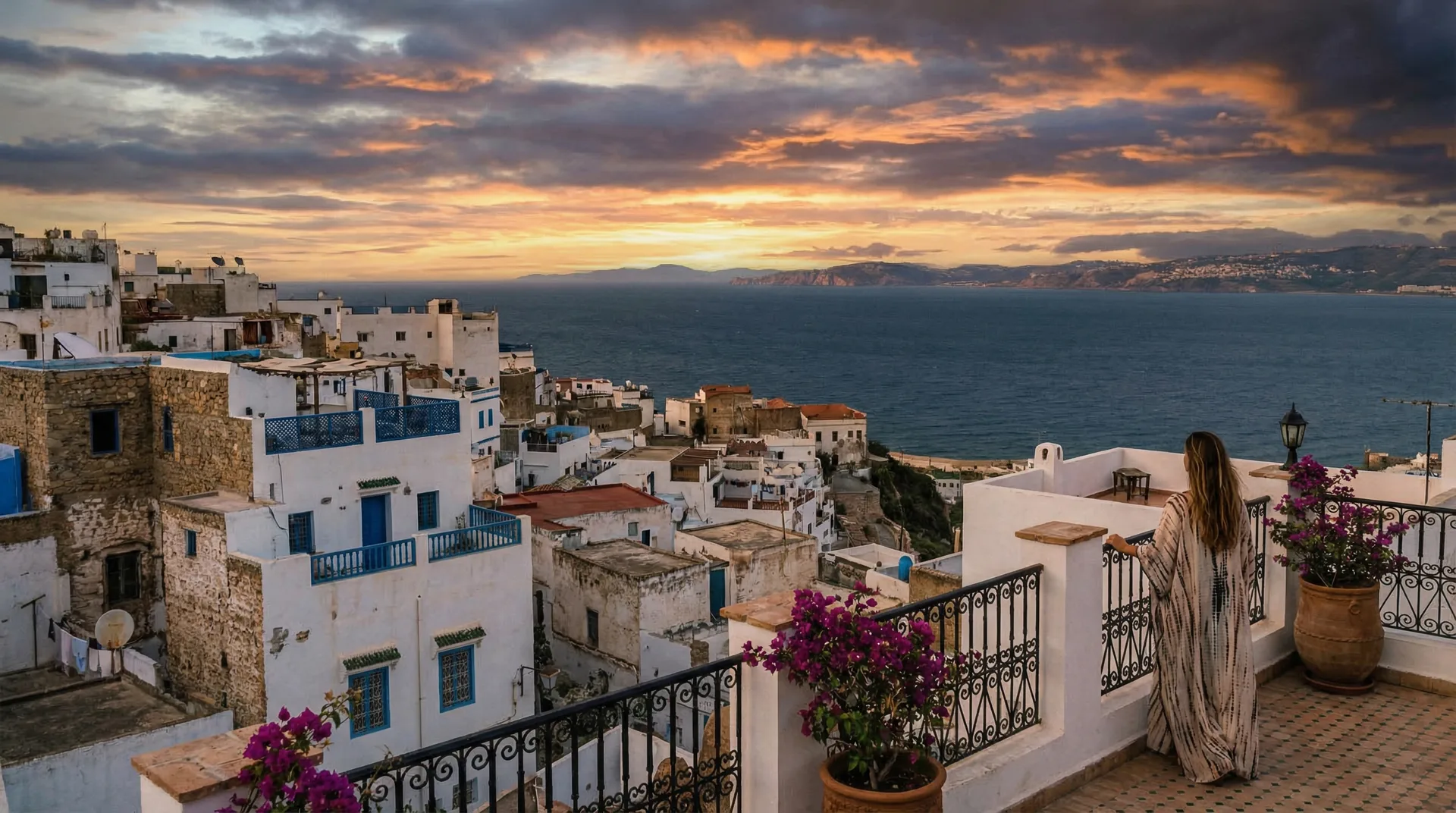
Tangier sits right at the mouth of the Strait of Gibraltar, where the Atlantic meets the Mediterranean and Spain is visible across the water. That position shapes its summer. From roughly June to August the city is warm but never punishing — typical daytime highs hover somewhere in the mid-to-high 20s°C — because the sea and its constant breezes temper the heat in a way the baking interior simply doesn't get. This is the beach-and-buzz season: the long city beach fills up, the cafés and the marina hum, and the ferries from Spain run full. Below is an honest account of what to expect — the good, the breezy and the busy. Treat the temperatures here as approximate norms; Tangier's coastal weather is genuinely changeable, and any week can run warmer, cooler or windier than the average.
What a Tangier summer actually feels like
Picture a lively port city in its sociable season rather than a still, sun-lounger resort. The heat is comfortable, softened by the breeze off the Strait, and the days are long. Mornings are bright and calm, afternoons draw people to the water, and the evenings are when the city truly comes alive — families and friends out along the seafront, cafés and terraces busy until late, the marina lit up. It's atmospheric, a little breezy, and unmistakably a working coastal city enjoying its summer, not a curated beach escape. If that sounds like your kind of summer, you'll love it.
The beaches & bays
The obvious starting point is the long city beach that curves along the bay, walkable from the medina and lined with cafés — easy, sociable and busy in summer. For more room and clearer water, head east toward Cap Malabata, where the bays open up and the views back across to the old town are lovely. West of the city, the Atlantic coast near Cap Spartel and the Caves of Hercules gives you wilder, open-ocean beaches and that famous spot where two seas seem to meet. A word of honesty: the Strait wind can make any of these breezy — wonderful for the views and the light, less ideal if you were hoping for flat, still water. Sea and wind conditions change day to day, so stay flexible.
For the full rundown of where to swim and stroll, see our Cap Spartel & Caves of Hercules guide.
The marina, cafés & seafront evenings
Summer evenings are Tangier's best trick. As the heat eases, the seafront and the Tanja Marina Bay become the place to be — a stroll along the water, a mint tea or a coffee on a terrace, grilled fish for dinner, and the lights of the boats on the marina. The café culture that has always defined this city is at its most sociable now, from the famous terraces above the sea down to the busy seafront promenade. It's the kind of slow, warm-evening atmosphere that makes people extend their trip by a day or two.
The crowds & the ferries from Spain
Tangier is a port city, and in summer its rhythm follows the ferries. This is peak season: crossings from Spain run full, day-trippers arrive for a taste of Africa, and Moroccan families return to holiday on the coast. The energy is wonderful, but it has practical consequences — the best stays book out, the beaches and cafés are at their fullest, and the ferry ports are at their busiest. The single most useful thing you can do is book your accommodation well ahead, ideally a kasbah guesthouse with a terrace before they're gone. If you're arriving from Spain, our ferry from Spain guide covers the routes, the passport routine and the time-difference catch.
The Strait wind, and why it matters
No honest summer guide skips the wind. The Strait of Gibraltar funnels two prevailing winds — the easterly Levante and the westerly Poniente — and breezy days happen even in July and August. That breeze is the very reason Tangier stays comfortable when inland Morocco is baking, so it's mostly a gift: it keeps the city fresh and the light extraordinary. But it can whip up the open beaches and the seafront, and on the strongest days it can make ferry crossings choppy or cause small delays. Pack a thin windproof layer even in summer, and leave a little slack in tight ferry connections.
A note on summer festivals
Tangier and the wider north have a scattering of warm-season cultural events worth knowing about. The best known is TANJAzz, the city's jazz festival — though it usually lands around September rather than mid-summer, and its dates move from year to year, so check the current programme before planning around it. Other northern events shift across the calendar too, so we won't pin exact dates here. For the general shape of the cultural year, see our northern Morocco festivals calendar.
What to pack for a Tangier summer
- Light, breathable fabrics for warm days in the medina and on the seafront.
- Swimwear, a hat and high-SPF sunscreen for the beaches and the boat and coast trips.
- A thin windproof layer — yes, even in July — for breezy seafront evenings and the ferry deck.
- Comfortable shoes with grip for the stepped lanes up to the kasbah.
For the full kit list and a season-by-season view, see our seasonal Tangier packing guide and our month-by-month best-time-to-visit guide.
Frequently asked
How hot does Tangier get in summer?
Tangier summers (roughly June to August) are warm rather than scorching — typical daytime highs sit somewhere in the mid-to-high 20s°C. Perched on the Strait of Gibraltar, the city is constantly tempered by the sea and its breezes, which keeps it noticeably cooler than Morocco's baking interior cities like Fes or Marrakech. These are approximate norms, so always check a forecast close to your dates.
Is summer a good time to visit Tangier?
Yes, if you want beaches, buzz and long seafront evenings — summer is Tangier's liveliest season. The city beach and the bays toward Cap Malabata fill up, the cafés and the marina hum, and Moroccan holidaymakers and day-trippers arrive by ferry from Spain. Be honest with yourself about what you're after, though: this is a breezy, busy coastal city in full swing, not a quiet beach resort. Book stays well ahead.
Are Tangier's beaches good in summer?
The long city beach along the bay is the easy option, walkable from the medina and lined with cafés, and it gets busy and sociable in summer. For more space, head east toward Cap Malabata, or west along the Atlantic coast near Cap Spartel and the Caves of Hercules. The famous Strait wind can make the beaches breezy — great for the views, less so if you want flat, still water — so conditions vary day to day with the wind.
Is it windy in Tangier in summer?
It can be. The Strait of Gibraltar funnels strong prevailing winds — the easterly Levante and the westerly Poniente — and breezy days happen in every season, including summer. That breeze is exactly why the city stays comfortable when inland Morocco bakes, but it can whip up the open beaches and the seafront. Pack a thin windproof layer even in July, and build a little slack into ferry crossings on the windiest days.
When is TANJAzz, the Tangier jazz festival?
TANJAzz, Tangier's well-loved jazz festival, is usually held around September rather than mid-summer — but the dates move from year to year, so check the current programme before you plan around it. If you'd like to time a visit to a festival, confirm the year's schedule close to booking. See our northern Morocco festivals calendar for the general shape of the cultural year.
Do I need to book accommodation in advance for a summer trip?
We'd strongly recommend it. Summer is peak season on the Strait: ferries from Spain run full, Moroccan families holiday on the coast, and the best kasbah guesthouses and seafront stays fill early. Booking ahead also helps you lock in a terrace or sea view before they go. The earlier you plan, the more choice you'll have.
Make the most of summer
Tell us your dates and we'll build your Tangier summer around them.
We work in Tangier year-round and know exactly how the summer feels on the ground — which beaches to time right, where to be at golden hour, and how to dodge the busiest ferry days. Share your travel window and we'll shape an itinerary that fits.
Request an itinerary