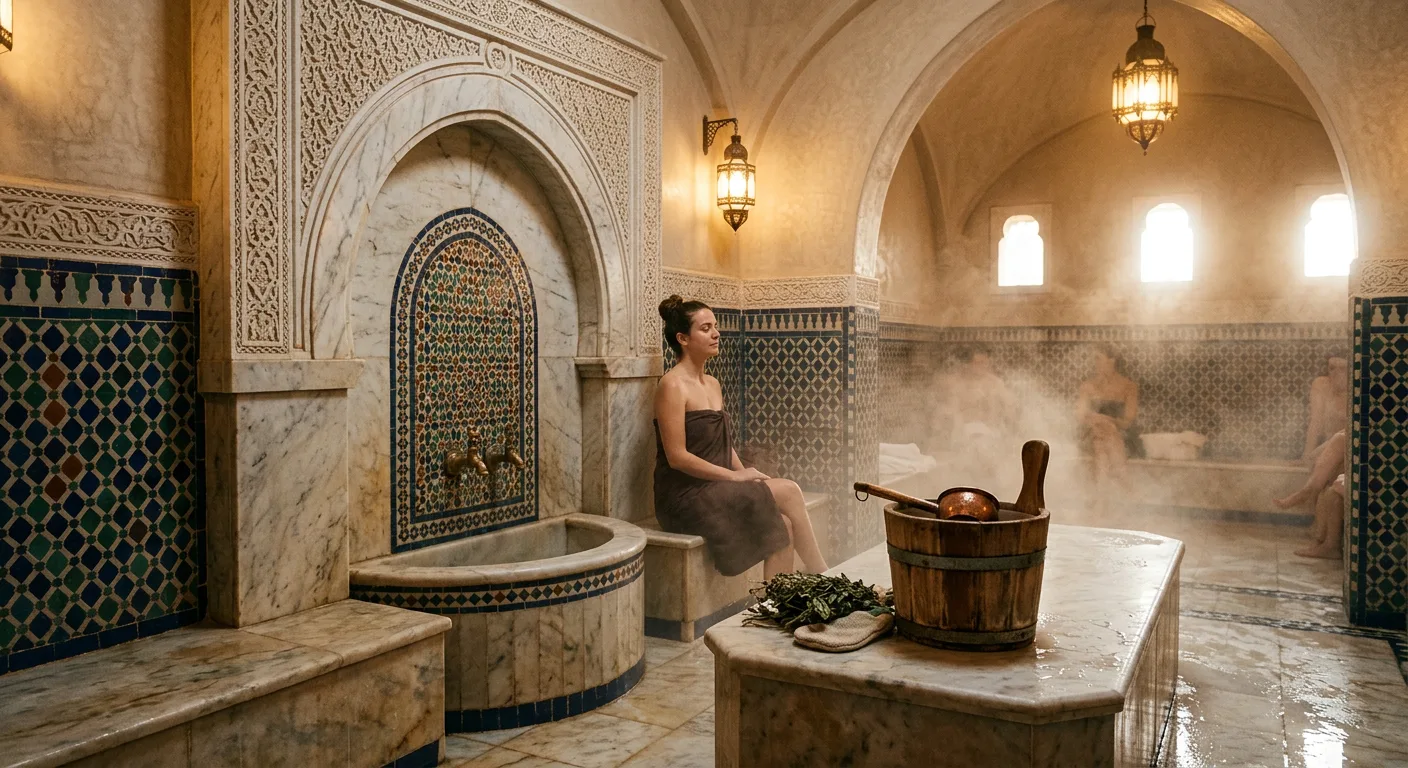
A hammam is a steam bathhouse and, for most of Moroccan history, the social heart of the neighbourhood. The ritual is straightforward: you warm up in steamy rooms, get coated in savon beldi — a dark olive-oil soap — then scrubbed head to toe with a rough kessa glove until the dead skin lifts off, before a cool rinse. In Tangier you can do it two ways: a plain, very cheap public hammam in the medina that locals use, or a candle-lit spa hammam in a riad or hotel. Either way you walk out with the smoothest skin of your life. Here is exactly what happens, what to wear, what it costs, and the handful of etiquette rules worth knowing before you go.
Warm up
- What
- Steamy rooms, rising heat
- Tip
- 10–15 min to soften the skin
Savon beldi
- What
- Black olive-oil soap
- Tip
- Sits ~10 min, doesn't lather
The kessa scrub
- What
- Coarse exfoliating glove
- Tip
- Firm — say 'shwiya' for gentler
Rinse & rest
- What
- Cool rinse, then mint tea
- Tip
- Skin like new; drink water
The classic four steps. A quick visit takes about an hour; the traditional, unhurried way takes two to three. Prices and products vary — confirm what's included before you start.
What actually happens inside
You undress to your underwear or swimwear in a changing area, then move into a warm, humid room to sit and let the heat open your pores — ten or fifteen minutes is plenty. An attendant (or you, at a basic public hammam) then spreads savon beldi all over you. It is a soft, dark paste pressed from olives that does not foam like Western soap; instead it sits on the skin for around ten minutes to soften everything up.
Then comes the part people remember: the kessa, a coarse exfoliating mitt, worked firmly across every inch of you in what Moroccans call the gommage. It rolls off grey little ribbons of dead skin — alarming the first time, then strangely satisfying, and entirely normal. Warm water from buckets sluices it all away. Many places follow with a clay or argan-oil mask and a short massage, then a final cool rinse. You leave glowing, a little dazed, and softer than you have felt in years.
Public hammam or spa hammam in Tangier?
Tangier gives you both ends of the spectrum. The public neighbourhood hammam, tucked into the lanes of the medina, is the real, centuries-old thing: a couple of dollars to get in, bring your own glove and soap, a basic tiled room full of locals, and an attendant you pay separately to scrub you. There is no English and no fuss, which is exactly its charm — and you will want our medina and kasbah guide to find your way to one. The spa or riad hammam is the softer landing — private or semi-private, products and towels provided, an attendant who speaks some English, and often an argan massage on the end. Many guesthouses in and above the kasbah offer treatments; our where to stay in Tangier guide points to the kinds of places that do.
What to wear and bring
Wear underwear or swimwear you don't mind ruining, in dark colours — the black soap can stain pale fabric. Men keep on shorts; women wear bottoms and usually a top. Full nudity is not appropriate in Morocco, so keep it modest. Bring flip-flops for the wet floors, a towel, and a dry change of clothes for afterwards. At a public hammam, pick up a kessa glove and a scoop of savon beldi for a few dirhams at the door or a nearby shop; a spa supplies all of it. A comb and some moisturiser for the walk home are nice to have — our what to pack for Tangier list covers the small extras.
What it costs
The gap between the two is huge, and both are good value. A public hammam charges only around 15 to 30 dirhams — a dollar or two — to get in, plus a few dirhams for your glove and soap, and a tip of roughly 20 to 50 dirhams for the attendant who scrubs you. A full spa or riad package — scrub, mask and usually a massage — typically runs from about 30 US dollars to 80 or more, depending on how luxurious the setting is and what is included. None of this is fixed, so ask exactly what your treatment covers before you commit, particularly at the spa end.
Etiquette and a few do-nots
Men and women always use separate spaces — either different buildings or different hours — so check the schedule at the door of a public hammam. Crucially, do not shave your legs or face in the 24 hours beforehand: the soap and the hard scrub sting on freshly shaved skin. If the kessa is too rough, say shwiya (gently); if you have had enough, bezzaf(enough). Drink plenty of water afterwards — the heat is dehydrating — and do not bolt straight out; the slow finish, a glass of mint tea and a sit-down, is part of it. And tip the attendant: it is expected and very much appreciated.
Making it part of your Tangier trip
A hammam is the perfect bookend to a day on your feet in the medina — go after the souks, not before, so you arrive dusty and leave renewed. It pairs naturally with the other slow Tangier rituals; once you are scrubbed and rested, nothing beats the mint tea ritual with a view over the Strait. If you are still finding your feet in the city, our things to know before visiting Tangier guide covers the wider etiquette, and a guided kasbah and medina walk is the easiest way to find the medina's quiet corners — hammam included.
Frequently asked
What is a Moroccan hammam, exactly?
A hammam is a steam bathhouse, and for centuries it has been the social heart of a Moroccan neighbourhood — somewhere people go weekly to get properly clean, warm and caught up on the news. The ritual is simple: you warm up in steamy rooms, slather on a dark olive-oil soap, get scrubbed down with a coarse mitt until the dead skin lifts away, then rinse cool. In Tangier you'll find two versions — the plain, cheap public hammam tucked into the medina that locals use, and the candle-lit spa hammam in a riad or hotel aimed at visitors. Both deliver the same fundamentally good idea: the best exfoliation of your life.
What actually happens during a hammam, step by step?
First you undress to your underwear or swimwear and move into a warm, humid room to soften the skin for ten or fifteen minutes. Then you're coated in savon beldi, a thick black soap made from olives, which sits on the skin for around ten minutes rather than lathering up. Next comes the main event: a firm scrub all over with a kessa, a rough exfoliating glove, which rolls off grey ribbons of dead skin — dramatic to watch, oddly satisfying, and the whole point. Buckets of warm water rinse it away, sometimes followed by a clay or argan mask and a short massage, then a cool rinse and a rest. Allow an hour at a minimum, two or three to do it slowly.
What should you wear and bring to a hammam in Tangier?
Wear underwear or swimwear you don't mind getting messy — men keep on shorts, women wear bottoms and often a top; full nudity is not the done thing in Morocco. Choose dark colours, because the black soap can stain pale fabric. Bring flip-flops or plastic sandals for the wet floors, a towel and a dry change of clothes, plus a comb and any moisturiser for afterwards. At a basic public hammam you may need to buy your own kessa glove and a scoop of soap (a few dirhams each) at the door or a nearby shop; a spa hammam supplies everything. Our packing guide covers the small extras worth having.
Public neighbourhood hammam or spa hammam — which is better for a first-timer?
It depends on what you want. A public hammam in the Tangier medina is the authentic, dirt-cheap, local experience — bring your own kit, expect a basic tiled room, no English and no frills, and hire an attendant for the scrub. It's wonderful if you want the real thing and don't mind a bit of uncertainty. A spa or riad hammam is gentler on the nerves: private or semi-private, an attendant who speaks some English, towels and products laid on, often with an argan-oil massage added. For a relaxed first time, the spa version is the easy choice; for a genuine slice of Tangier life, the public hammam wins.
How much does a hammam cost in Tangier?
The two versions sit far apart on price. Entry to a public neighbourhood hammam is only a dollar or two — roughly 15 to 30 dirhams — plus a few more for a kessa glove and soap, and a tip of about 20 to 50 dirhams if you pay a local attendant to scrub you. A spa or riad hammam package, with a full scrub, mask and often a massage, typically runs from around 30 US dollars to 80 or more depending on how plush the place is and what's included. Prices vary and aren't fixed, so confirm what you'll get before you start, especially at a spa.
What's the etiquette — and is there anything to avoid?
A few simple rules. Men and women always use separate spaces, either different buildings or different hours, so check the schedule at the door. Don't shave your legs or face in the 24 hours before you go — the soap and hard scrub sting badly on freshly shaved skin. Keep some modesty; underwear stays on. If the scrub is too rough, just say shwiya (gently); if you've had enough, bezzaf (enough). Drink water afterwards, as the heat is dehydrating, and don't rush straight out — a glass of mint tea and a sit-down is part of the ritual. Tip the attendant; it's expected and appreciated.
The best scrub of your life
We'll match you to the right hammam.
Tell us whether you want the real public bathhouse in the medina or a private spa hammam with an argan massage, and we'll build it into your day — after a guided kasbah and medina walk, so you earn it.